I’ve done daytime NTV twice now. The first time, I was invited by Wallace Kantai, and I asked him whether he knew what the audience looked like for their 1pm show. ‘We’re still trying to find out,’ he said. Wallace and I have been buddies for a while, so we chatted away happily for about 45min in what was a fun session. Later, I had a look at my email and found a number of Facebook request from people who had seen me on the show. Interestingly, these were all young men, probably in their 20s. So is this NTV’s daytime audience? Or was there an element of self selection?
Not all of these Facebook ‘friendships’ ended happily:
I deleted the young man who asked me how I ‘compare being an atheist and Christianity’. I told him that there was plenty of online material available on this issue, so if this was of interest to him, he would just have to do the research. No, he insisted: He’d HAVE to know from me personally. Yes, he brought out the capital letters. After he posted a religious item on my page for the third time, I decided it was time to part ways.
A second virtual contact sent me this message: ‘Aint no wise guy but wuld reali luv to get down wit u! mmmm... precisely’. Mind you, I’ve never met him before. We exchanged a few messages in which I tried to explain that not only was this badly spelled, but also inappropriate. He eventually seemed to see the point of the latter, but then surprised me with this: ‘Would have really loved to lick you from head to toe.’ Gone.
Today I was invited by Larry Madowo. It was a much shorter discussion, but nevertheless yielded some interesting Facebook follow up:
‘hi, i hope u well, i have a business idea and hope that u could finance it please, lemme know.’
Also, a friend request with this message: ‘R u singl andrea am xo xo krazy ova u jst saw u on ntv.’
And as luck would have it, a former Facebook stalker also watched it and sent me an sms that ended with ‘Don’t u b tht quiet though!’. This was a man who had expressed an interest in ‘having intimacy’ with me, and was quiet unbothered by the fact that I didn’t even want to be friends with him. I intend to stay very, very quiet.


22 March 2011
Why I don't feel so positive about Kenya's higher education right now - or: Are they smoking crack?
Macharia Gaitho kindly shared this today. And of course they had to be matching. Read and enjoy:
PRESS RELEASE - WEST SHOULD STOP BOMBING INDIA
Good evening everyone?
This is to inform all the media houses that there will a huge demo tomorrow at 10.00am by University students from uhuru park to the french embassy. University students will be calling on countries like USA,Quartar,France ,Britain, Denmark and others to provide a peaceful solution in India than bombings and attacking them. We will be matching from Uhuru park,haillesellassie, moi avenue ,kenyatta avenue then to the embassy. Thank u.
Signed,
MOSES NANDALWE-Sec Gen. Universities Student Leaders Association-Kenya[USLA-K]
FRED KUBAI-UON
SIMON GATHUO-KU
CALVIN OCHOLLAH-UON
FRANK OCHENG-UON
CYNTHIA ALLUVISSA-AVIATION
OTOA GARANG-KU
REUBEN WANGOKHO-Kenya Poly
PRESS RELEASE - WEST SHOULD STOP BOMBING INDIA
Good evening everyone?
This is to inform all the media houses that there will a huge demo tomorrow at 10.00am by University students from uhuru park to the french embassy. University students will be calling on countries like USA,Quartar,France ,Britain, Denmark and others to provide a peaceful solution in India than bombings and attacking them. We will be matching from Uhuru park,haillesellassie, moi avenue ,kenyatta avenue then to the embassy. Thank u.
Signed,
MOSES NANDALWE-Sec Gen. Universities Student Leaders Association-Kenya[USLA-K]
FRED KUBAI-UON
SIMON GATHUO-KU
CALVIN OCHOLLAH-UON
FRANK OCHENG-UON
CYNTHIA ALLUVISSA-AVIATION
OTOA GARANG-KU
REUBEN WANGOKHO-Kenya Poly
10 March 2011
Congo on the Brink: No – really?
I have learned about this thanks to actor Ben Affleck: "Having just returned from the Congo last month I can assure you that Congo is on the brink" (source).
Thank you, Ben. This was news to me. Or was it? Wait. Hasn’t Congo (Congo-Kinshasa, I assume, although Congo-Brazzaville isn’t so peachy either) been on the brink for, errr, years now? In fact, this is DRC’s address, in case you ever want to mail something:
DR Congo
On the Brink
Central Africa
Actor Affleck testified before the US Congress's Human Rights subcommittee. I don’t doubt Affleck’s good intentions for a second, but it beats me why anyone would listen to an actor on DRC, even one who has visited DRC several times. There are easily a gazillion people more qualified to speak about DRC, and anyone who doesn’t object to be told about DRC by an actor needs to get his/her head examined. And as long as Affleck doesn’t recognize this, he can’t be serious either.
And more aid, Ben? What exactly is more aid going to do?
That is all.
Thank you, Ben. This was news to me. Or was it? Wait. Hasn’t Congo (Congo-Kinshasa, I assume, although Congo-Brazzaville isn’t so peachy either) been on the brink for, errr, years now? In fact, this is DRC’s address, in case you ever want to mail something:
DR Congo
On the Brink
Central Africa
Actor Affleck testified before the US Congress's Human Rights subcommittee. I don’t doubt Affleck’s good intentions for a second, but it beats me why anyone would listen to an actor on DRC, even one who has visited DRC several times. There are easily a gazillion people more qualified to speak about DRC, and anyone who doesn’t object to be told about DRC by an actor needs to get his/her head examined. And as long as Affleck doesn’t recognize this, he can’t be serious either.
And more aid, Ben? What exactly is more aid going to do?
That is all.
28 February 2011
Smackdown 101 for ICC Boycotters
Kalonzo Musyoka, the ‘servant leader’ – and yes, these are quotation marks of derision - has wasted plenty of public funds and his servant-leader time that is also paid for with public funds by running around the continent to badger other countries presidents to support Kenya’s bid for an ICC deferral.
For this little pet project that he so diligently executes on behalf of the president, Kalonzo Musyoka came up with a couple of astonishing statements. Reportedly. I use the word ‘reportedly’ here on purpose because Mr Musyoka often calls up media houses and complains that a) he never said such a thing ever, and also that b) he was quoted out of context.
According to a Star reporter, he argued that under the law, the government was obliged to pay the legal fees of those who were acting in the course of their employment during the 2007/2008 post poll chaos, i.e., Hussein Ali and Francis Muthaura. More interestingly, he added that ‘it would be very expensive for the six named as bearing the heaviest responsibility for the violence and further called on Kenyans to help each other in catering for the fees as it would serve to also bring us closer together as a nation.’
More recently, he also said that local prosecutions would enable the courts to ‘dig dipper’ (although I credit Nation’s copy-editing with the ‘dipper’ bit).
Let’s look at this for a second:
Kenyans – yes, those people who elected the servant-leader, I presume (he *did* get a couple of votes) and the whole other sorry lot – overwhelmingly want the prosecutions to take place in Den Hague. End of. Be a servant leader, Mr Musyoka. Or, to use an expression that has become incredibly popular with politicians recently, ‘read the mood of the country’.
And remember that it was the MPs who coined the fun term 'Don't be vague, it's The Hague' while they voted against a local tribunal repeatedly.
No, Kenya most certainly doesn’t have the capacity to prosecute those cases. The judiciary is notoriously corrupt, and even if – and that’s a huge if – Kenya actually made any credible moves towards cleaning up the judiciary, it will take years for this to take root. These cases don’t have years. And if we ever needed a reminder (we don’t), the infuriating bitchfest around the appointment of the AG and CJ are evidence that Kenya doesn’t have its act together.
The new constitution won’t make a blind bit of difference here either – spend ten minutes in traffic and you know how nobody, from the minister with flag to the ordinary citizens, has any respect for rules. None.
Local prosecutions ask a government to investigate itself. A classic case of conflict of interest. It will not happen.
Kenya cannot ensure witness protection. Period.
Nothing in the old or new constitution made chopping someone up with a panga legal. Nor was it legal to chase someone away from his/her property, loot his/her property, or burn people. I am not aware of a single prosecution. Why not? What’s stopping this? It doesn’t need Den Hague, and if anyone were serious, there’d have been plenty of court cases already.
Kalonzo Musyoka also said that alongside a local tribunal, the government would resettle IDPs. I, for one, don’t understand why a resettlement is necessary in the first place. If there is no fight and no acrimony, Mr Ruto, why can’t those people go back to their own property? What’s the problem? Is there any reason why they can’t go back? And if there is a reason, then what has stopped the Kenyan government from resolving this problem? This has nothing to do with ICC or not ICC. At. All.
Remember this?
For this little pet project that he so diligently executes on behalf of the president, Kalonzo Musyoka came up with a couple of astonishing statements. Reportedly. I use the word ‘reportedly’ here on purpose because Mr Musyoka often calls up media houses and complains that a) he never said such a thing ever, and also that b) he was quoted out of context.
According to a Star reporter, he argued that under the law, the government was obliged to pay the legal fees of those who were acting in the course of their employment during the 2007/2008 post poll chaos, i.e., Hussein Ali and Francis Muthaura. More interestingly, he added that ‘it would be very expensive for the six named as bearing the heaviest responsibility for the violence and further called on Kenyans to help each other in catering for the fees as it would serve to also bring us closer together as a nation.’
More recently, he also said that local prosecutions would enable the courts to ‘dig dipper’ (although I credit Nation’s copy-editing with the ‘dipper’ bit).
Let’s look at this for a second:
Kenyans – yes, those people who elected the servant-leader, I presume (he *did* get a couple of votes) and the whole other sorry lot – overwhelmingly want the prosecutions to take place in Den Hague. End of. Be a servant leader, Mr Musyoka. Or, to use an expression that has become incredibly popular with politicians recently, ‘read the mood of the country’.
And remember that it was the MPs who coined the fun term 'Don't be vague, it's The Hague' while they voted against a local tribunal repeatedly.
No, Kenya most certainly doesn’t have the capacity to prosecute those cases. The judiciary is notoriously corrupt, and even if – and that’s a huge if – Kenya actually made any credible moves towards cleaning up the judiciary, it will take years for this to take root. These cases don’t have years. And if we ever needed a reminder (we don’t), the infuriating bitchfest around the appointment of the AG and CJ are evidence that Kenya doesn’t have its act together.
The new constitution won’t make a blind bit of difference here either – spend ten minutes in traffic and you know how nobody, from the minister with flag to the ordinary citizens, has any respect for rules. None.
Local prosecutions ask a government to investigate itself. A classic case of conflict of interest. It will not happen.
Kenya cannot ensure witness protection. Period.
Nothing in the old or new constitution made chopping someone up with a panga legal. Nor was it legal to chase someone away from his/her property, loot his/her property, or burn people. I am not aware of a single prosecution. Why not? What’s stopping this? It doesn’t need Den Hague, and if anyone were serious, there’d have been plenty of court cases already.
Kalonzo Musyoka also said that alongside a local tribunal, the government would resettle IDPs. I, for one, don’t understand why a resettlement is necessary in the first place. If there is no fight and no acrimony, Mr Ruto, why can’t those people go back to their own property? What’s the problem? Is there any reason why they can’t go back? And if there is a reason, then what has stopped the Kenyan government from resolving this problem? This has nothing to do with ICC or not ICC. At. All.
Remember this?
Club-footed Social Media Poverty Poster Child
So this is a little intriguing: News.com.au has an article about Darren Rowse, described as ‘one of Australia’s biggest bloggers’, and his trip to Tanzania to ‘to test the idea that social media can be used for good.’
I think that one of the cool things about the internet is that you don’t actually need to go anywhere to check things out. Darren surely must have access to google and online news as well, so he might have heard the odd story or five about an entire Twitter and Facebook-supported revolution in Tunisia and Egypt. Maybe he could have sat down and googled around Africa/East Africa a bit and checked out what people here are up to in social media and the internet in general?
Because then we might not have ended up with the usual little poverty poster child for his initiative. This time, it’s not flies in the eyes and a distended belly:
‘Rowse said one of his main goals was to let people from Tanzania tell their own stories. "A little boy with a club foot or a cleft pallet (will) be able to tell his story in a way he may not have been able to do," he said.’
I think he meant cleft palate, but aside from that, I hope he also asks a business woman in her shiny big four-wheel drive to ‘tell her own story’.
‘We'll be blogging on the road, really, wherever we can find internet access, tweeting and creating videos.’ Just bring a smart phone and you’re good to go wherever there’s network coverage. That's how we do it here. The whole mobile thing, you know. Look it up. It's on google.
Yeah yeah, good intentions. I know.
I think that one of the cool things about the internet is that you don’t actually need to go anywhere to check things out. Darren surely must have access to google and online news as well, so he might have heard the odd story or five about an entire Twitter and Facebook-supported revolution in Tunisia and Egypt. Maybe he could have sat down and googled around Africa/East Africa a bit and checked out what people here are up to in social media and the internet in general?
Because then we might not have ended up with the usual little poverty poster child for his initiative. This time, it’s not flies in the eyes and a distended belly:
‘Rowse said one of his main goals was to let people from Tanzania tell their own stories. "A little boy with a club foot or a cleft pallet (will) be able to tell his story in a way he may not have been able to do," he said.’
I think he meant cleft palate, but aside from that, I hope he also asks a business woman in her shiny big four-wheel drive to ‘tell her own story’.
‘We'll be blogging on the road, really, wherever we can find internet access, tweeting and creating videos.’ Just bring a smart phone and you’re good to go wherever there’s network coverage. That's how we do it here. The whole mobile thing, you know. Look it up. It's on google.
Yeah yeah, good intentions. I know.
11 February 2011
Toes and Doglet
Doglet looking at the garden and fresh pedicure from Aromatics Spa, with OPI nail polish 'Lincoln Park After Dark', and mother-of-pearl button flip flops from Annabel Thom's shop Zebu shop at the Junction.


Before that, I was wearing 'I'm Indi-a Mood for Love', also from OPI, with my new, supergorgeous shoes from Mocca at Westgate:

There are shoes, and good shoes, and shoes that you just know will change your life, and make everything perfect:


Before that, I was wearing 'I'm Indi-a Mood for Love', also from OPI, with my new, supergorgeous shoes from Mocca at Westgate:
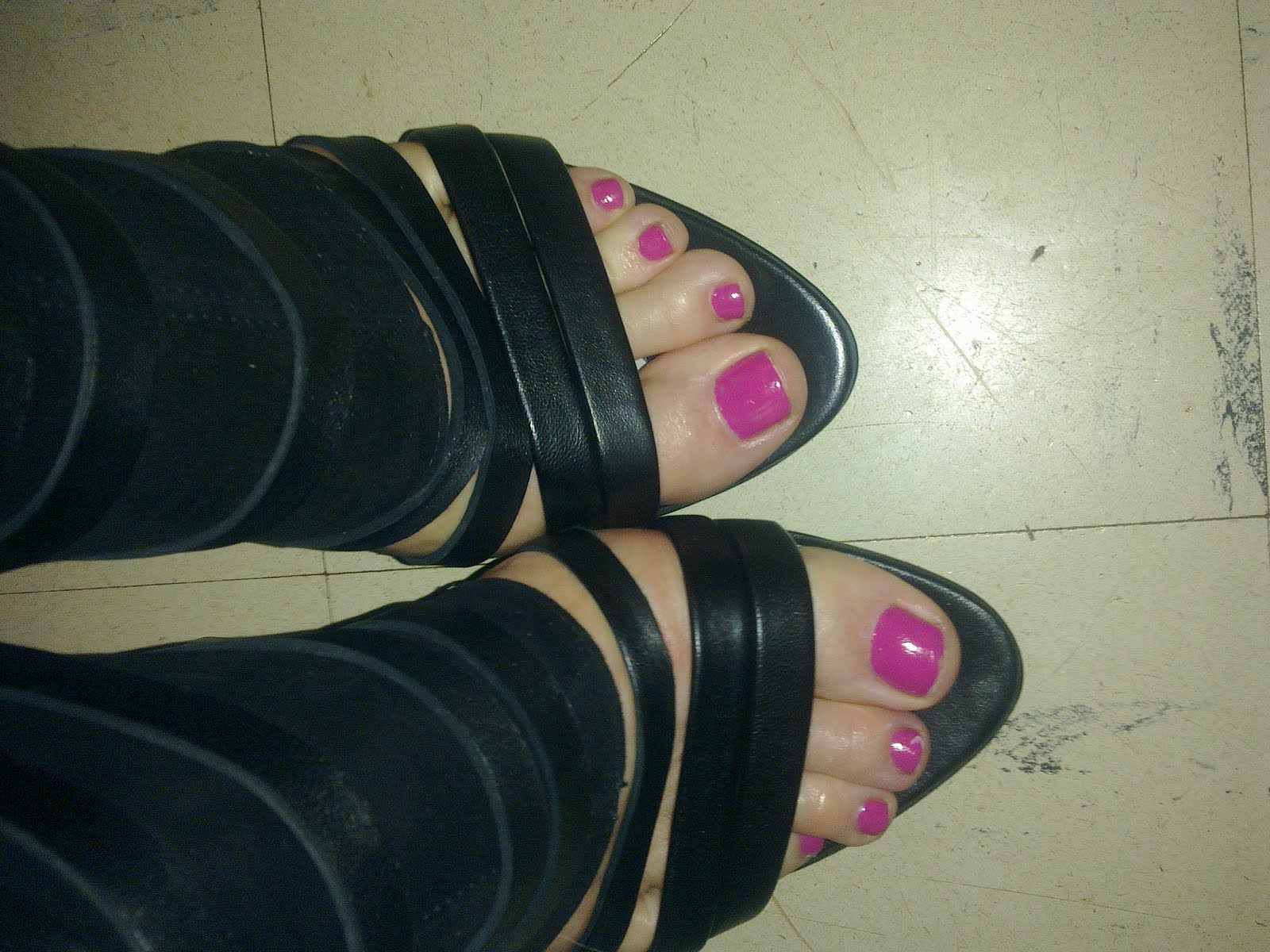
There are shoes, and good shoes, and shoes that you just know will change your life, and make everything perfect:

08 February 2011
Local Content: Smart Kenyan Porn Venture
I wrote this for my column in the Star in early December 2010.
Sometimes you really have to wonder, and I wondered twice: First, like everyone else, about the pope’s comment that condoms might be permissible in male gay prostitution. And just as we all thought it was weird, but at least a small step, I wondered again when Cardinal Njue issued a lengthy statement that the pope was quoted out of context (how Kalonzo Musyoka of him), and that ‘the position of the Catholic Church as regards the use of condoms, both as a means of contraception and as a means of addressing the grave issue of HIV/AIDS infection, has not changed and remains as always unacceptable’. Right on, sir – this has the benefit of clarity. No gray areas, no subtleties, no scope for decisions. Just step away from the rubbers and you’ll be right as rain.
However, Njue then also boldly claimed that ‘thankfully prostitution and homosexuality are alien to Kenyan society’. Now make-believe is great – I have an alternative world in my head in which I own a sizeable collection of Prada shoes and am having coffees with Zaha Hadid to discuss the house she’ll design for me. But apart from that, I strive to be a little more empirical.
I do understand that the good cardinal must be very busy with church matters, and probably doesn’t get to hang out much in pubs and bars where you’d encounter prostitutes. Perhaps he doesn’t drive along Kenyatta Avenue past the working ladies in the evening much. Most likely he doesn’t spend much time in the bars where Nairobi’s gay community drinks. Maybe he has no gaydar and just wouldn’t spot them anywhere around him. But both prostitution and homosexuality are very much part of the fabric of society in Kenya as anywhere else in the world. And since the previous US administration has so powerfully demonstrated what an enduring mess you can create with the Bush II approach to reality ("I know what I believe. I will continue to articulate what I believe and what I believe — I believe what I believe is right."), I’m respectfully dedicating today’s column to Mr Njue and the pursuit of facts.
I write about ICT issues quite regularly. Apart from the infrastructure and technical issues, there’s the big area of digital content that interests me: Internet access is growing rapidly, more and more people use their mobile phones to go online, and then there’s the transition from analogue to digital TV. All of this has created vastly more space for digital content, and consequently more demand. The digital space also forces us to rethink categories like local and international: I remember Alex Okosi from MTV explaining that they would promote African content, but not exclusively so since MTV also wanted to be a window the world. I love that I don’t need to be in the UK to read the Sunday Times and have access to the NY Times every day. By the same measure, very local content becomes accessible to the world.
One of the more interesting digital ventures I have come across is a Kenyan adult content website. At first glance, it’s not very sleek at all: The graphic design is a bit basic and haphazard, as is the spelling. The videos they sell are clearly a low-cost production, no exactly super-attractive actors, very basic settings. But here is why I was impressed: Kenyans are a peculiar lot - just remember the stylish Celtel ads and how everyone turned up their noses because the models didn’t ‘look Kenyan’? Not a mistake these guys make. It’s deliberately local content and as with TV series such as Makutano Junction, the audience will identify with it. And then they take the local angle a step further by having tribal smut. Yes, really: they advertise ‘vernacular dirty talk’. They make full use of mobile payment mechanisms: send your payments by M-PESA or Zap (and no sambaza, they warn). They work with whatever technology their clients have: If you have a good internet connection, you can download the videos after payment. If not, you can order DVDs for delivery. The website also has a page with hook ups and one for pre-approved sex workers (and the latter don’t look very alien to me). While they clarify that selling videos is their main focus, this will generate extra revenues and extra traffic.
And, I just noticed, they have a little ‘Be wise – use a condom’ alert on the top left of the website. Sensible people.
It’s a great story – and at the same time common as ugali. Enterprising Kenyans are part of the global smut industry, and like everywhere else, porn uses and drives technological developments. Porn might be illegal in Kenya, but this restriction becomes meaningless in the digital space where there is a deluge of adult content already. It’s a hugely competitive space and the internet has, in fact, been a revenue killer for a large part of the established porn industry. But how many providers of digital vernacular smut do you know? Well played, I think.
I, for one, am not Catholic, so I don’t take reproductive health advice from a celibate man in a dress. But the pope’s word and that of his clerics carries weight with a great many people. So some sort of engagement with reality would be good. I recently laughed when I found the term ‘evidence-based policies’ because it seemed silly – what else would it be based on? I don’t laugh anymore.
Sometimes you really have to wonder, and I wondered twice: First, like everyone else, about the pope’s comment that condoms might be permissible in male gay prostitution. And just as we all thought it was weird, but at least a small step, I wondered again when Cardinal Njue issued a lengthy statement that the pope was quoted out of context (how Kalonzo Musyoka of him), and that ‘the position of the Catholic Church as regards the use of condoms, both as a means of contraception and as a means of addressing the grave issue of HIV/AIDS infection, has not changed and remains as always unacceptable’. Right on, sir – this has the benefit of clarity. No gray areas, no subtleties, no scope for decisions. Just step away from the rubbers and you’ll be right as rain.
However, Njue then also boldly claimed that ‘thankfully prostitution and homosexuality are alien to Kenyan society’. Now make-believe is great – I have an alternative world in my head in which I own a sizeable collection of Prada shoes and am having coffees with Zaha Hadid to discuss the house she’ll design for me. But apart from that, I strive to be a little more empirical.
I do understand that the good cardinal must be very busy with church matters, and probably doesn’t get to hang out much in pubs and bars where you’d encounter prostitutes. Perhaps he doesn’t drive along Kenyatta Avenue past the working ladies in the evening much. Most likely he doesn’t spend much time in the bars where Nairobi’s gay community drinks. Maybe he has no gaydar and just wouldn’t spot them anywhere around him. But both prostitution and homosexuality are very much part of the fabric of society in Kenya as anywhere else in the world. And since the previous US administration has so powerfully demonstrated what an enduring mess you can create with the Bush II approach to reality ("I know what I believe. I will continue to articulate what I believe and what I believe — I believe what I believe is right."), I’m respectfully dedicating today’s column to Mr Njue and the pursuit of facts.
I write about ICT issues quite regularly. Apart from the infrastructure and technical issues, there’s the big area of digital content that interests me: Internet access is growing rapidly, more and more people use their mobile phones to go online, and then there’s the transition from analogue to digital TV. All of this has created vastly more space for digital content, and consequently more demand. The digital space also forces us to rethink categories like local and international: I remember Alex Okosi from MTV explaining that they would promote African content, but not exclusively so since MTV also wanted to be a window the world. I love that I don’t need to be in the UK to read the Sunday Times and have access to the NY Times every day. By the same measure, very local content becomes accessible to the world.
One of the more interesting digital ventures I have come across is a Kenyan adult content website. At first glance, it’s not very sleek at all: The graphic design is a bit basic and haphazard, as is the spelling. The videos they sell are clearly a low-cost production, no exactly super-attractive actors, very basic settings. But here is why I was impressed: Kenyans are a peculiar lot - just remember the stylish Celtel ads and how everyone turned up their noses because the models didn’t ‘look Kenyan’? Not a mistake these guys make. It’s deliberately local content and as with TV series such as Makutano Junction, the audience will identify with it. And then they take the local angle a step further by having tribal smut. Yes, really: they advertise ‘vernacular dirty talk’. They make full use of mobile payment mechanisms: send your payments by M-PESA or Zap (and no sambaza, they warn). They work with whatever technology their clients have: If you have a good internet connection, you can download the videos after payment. If not, you can order DVDs for delivery. The website also has a page with hook ups and one for pre-approved sex workers (and the latter don’t look very alien to me). While they clarify that selling videos is their main focus, this will generate extra revenues and extra traffic.
And, I just noticed, they have a little ‘Be wise – use a condom’ alert on the top left of the website. Sensible people.
It’s a great story – and at the same time common as ugali. Enterprising Kenyans are part of the global smut industry, and like everywhere else, porn uses and drives technological developments. Porn might be illegal in Kenya, but this restriction becomes meaningless in the digital space where there is a deluge of adult content already. It’s a hugely competitive space and the internet has, in fact, been a revenue killer for a large part of the established porn industry. But how many providers of digital vernacular smut do you know? Well played, I think.
I, for one, am not Catholic, so I don’t take reproductive health advice from a celibate man in a dress. But the pope’s word and that of his clerics carries weight with a great many people. So some sort of engagement with reality would be good. I recently laughed when I found the term ‘evidence-based policies’ because it seemed silly – what else would it be based on? I don’t laugh anymore.
28 January 2011
Tales of the Doglet: School Lane
Ollie the Doglet needs to go for a walk every day. He’d happily go for several walks, but has to have at least one. Otherwise he’ll sit on the sofa next to me (i.e. almost at eye level) and stare at me persistently with an expression that is both eager and a bit anxious. It wears you down.
These were from my old neighbourhood, on School Lane:
‘Is it a dog?’ (10-year old girl)
‘What do you think it is?’
On Matundu Lane, an older man walks towards us in a calm and composed manner. As he comes closer, he raises an eyebrow, ever so slightly, and then glances at Ollie, without breaking his stride, without really turning his head:
‘Cat?’ he says
‘No’, I say. ‘Rabbit in a dog costume’.
We both walk on.
There are always guys on bikes with crates on the back who deliver milk or bread or other goods to the small kiosks in the area. One of them – either perennially cheerful, or very proud of his knowledge of dogs, or possibly both – saw Ollie chew grass and, cycling past, called happily ‘It’s taking its medicine!’.
A few weeks later, a different corner, he threw us an exuberant ‘It’s glazing!’
Ollie was still very little when we lived on School Lane:

Find Ollie Doglet on Facebook.
These were from my old neighbourhood, on School Lane:
‘Is it a dog?’ (10-year old girl)
‘What do you think it is?’
On Matundu Lane, an older man walks towards us in a calm and composed manner. As he comes closer, he raises an eyebrow, ever so slightly, and then glances at Ollie, without breaking his stride, without really turning his head:
‘Cat?’ he says
‘No’, I say. ‘Rabbit in a dog costume’.
We both walk on.
There are always guys on bikes with crates on the back who deliver milk or bread or other goods to the small kiosks in the area. One of them – either perennially cheerful, or very proud of his knowledge of dogs, or possibly both – saw Ollie chew grass and, cycling past, called happily ‘It’s taking its medicine!’.
A few weeks later, a different corner, he threw us an exuberant ‘It’s glazing!’
Ollie was still very little when we lived on School Lane:

Find Ollie Doglet on Facebook.
26 January 2011
Tsavo in a Taxi (Dec 2005)
It had seemed a reasonably straightforward idea at the time, in October. Rather than buy four tickets to fly from Nairobi to Lamu in the peak season, hire one vehicle (because they are always ‘vehicles’ and never cars) and drive. So I had left my trusted taxi driver Samuel with such instructions when I left in October, and felt sorted about it. By the time I was back for Christmas, things had turned a little more interesting: According to Samuel, hiring a van would have been very expensive indeed and also a bit uncomfortable – who wants to do that long drive in a matatu, after all? Hiring a proper four-wheel drive would have extortionately expensive as it was, well, high season. I couldn’t quite get to the bottom of why Samuel hadn’t done the booking in early November, but it was too late anyway. As we were planning to leave on Thursday, and it was Monday already, I took him up on his offer to use his car. A typical white station wagon with the yellow Nairobi taxi stripes on the side. Four women plus a guitar plus luggage.
One woman was then, with sufficient drama, taken off the passenger list: We had meant to pick up Denise from Nairobi airport on the way out to Lamu on Thursday morning, but for an afternoon, it looked like she might not be able to join us at all: Darfour airport, in eastern Sudan, had been summarily, and at very short notice, closed ‘for maintenance’, never mind the scheduled flights. Eventually, her travel agent had worked unspeakable magic and found her a flight out to Mombasa, and then managed to book the missing leg to Lamu for the next day. At the same time, I sent a text to Lorna and Mine: ‘Fancy coming to Lamu with us? Plenty of space in the house’.
It took them less than a day to agree, and they brought two new important additions: Their green-white Landrover as an additional car, and the suggestions to not follow Mombasa Road all the way to the coast, but to take the scenic route through Tsavo National Park. A bit longer to drive, but far more fun, said Mine, who should know.
On Mombasa Road
So we set off on Thursday morning, a bit later than planned, but with coffee in flasks, sandwich material, chocolate cookies, and two cars. Lorna and Mine in the Landrover, with Gillian in the back, and Kechil and myself and her guitar in Samuel’s taxi. Mombasa Road out of Nairobi goes past the turnoff for Jomo Kenyatta International Airport and is a little shabby at first – not outright potholed, but uneven, and it’s difficult to go very fast. It leads through the industrial area, dry and dirty, with rusty buildings. As the city peters out, the trucks both old and new, but all big, remain constant in both directions, a steady stream back and forth from Mombasa seaport. The landscape keeps changing slowly, dry areas, flat areas, hills at the sides, some dry-ish low vegetation. After a while, the road turns smooth and fast – thanks to EU financing, as we read from the signs. Small settlements at the roadside are often clearly geared at travellers and in particular truck drivers – and create a paint-by-numbers network of the transmission of HIV/AIDS throughout the country.

After gunning down a near perfect road for miles, the bliss reaches its end – the road hasn’t been finished all the way to Mombasa, and we need to go sideways on a much bumpier, older road, with less space for the big trucks, whilst the proper road is still being extended.
Then we lose the Landrover. We’re in the wrong place and wait too long and they have passed us by, so once we’ve figured out where everyone is, we race off to catch up with them at the gate. The landscape is emptier and wider as we turn off the road to the left to Tsavo National Park gate. The guys at the gate have a look at Samuel’s car and tell us it should be ok: it has been dry for a long time. We have a picnic as we won’t be allowed to get out of the car once inside the park. We shouldn’t, in any case. Sometimes it can’t be avoided. As, for example, when Samuel’s tire goes flat just a few kilometres into the park. Brilliant, I think – we’ve only just started. With Lorna’s help, the tyre is exchanged quickly for an even more fragile one, with its profile nearly run down smooth. I try not to worry because there’s really no point now, and on top of that, I can’t even change a tyre to save my life. But what do we do when the next one goes? There’s very little traffic in the park, and after a while, we’re out of mobile phone network coverage, too.
Through Tsavo
I soon stop thinking about this, though. Tsavo is spacious, and the earth changes from deep amber to white and yellow sand. A range of hills (large hills? small mountains?) to our left, all seemingly cut off straight at the top. Before it a river snakes its way through the park, and on its banks, despite the low water levels, vegetation is green and lush, with large palm trees swaying.

The roads are graded, but well maintained and relatively easy to drive. What grows on both sides is dry and thin. When entering the park, Mine had warned us that Tsavo elephants were notoriously bad-tempered – according to her, they charge without warning, at the drop of a hat (an elephant hat, presumably). And they mean it: they *will* follow you. I believe that it might take a few moments for an elephant to get going, given their huge mass, but don’t know how fast they can get, and certainly am not keen to test this in a Nairobi taxi. On a graded road. With the spare tyre on.
It’s in the middle of the day and scorching hot, so most animals must have decided to hide away and wait it out. A few of the usual jumpy things around – dik dik, tiny antelopes, lovely chunky larger waterbuck – and a few elephants. When we were coming down a road to a bend, we see three elephants ahead of us crossing the roads from the bush on the left into the bush on the right. We stop the car to figure out whether more were going to follow, and as the bushes on the left have stopped moving, decide to move forward carefully – just to stare a buffalo in the face. Now elephants may be bad-tempered and have a short fuse in Tsavo, but buffaloes are known as stupid and aggressive pretty much everywhere. We pull the car back a few metres, take a deep breath, and then decide to give it a go again. All wildlife has duly disappeared into the bushes and leaves us to pass through. Bit giddy, though!
The entire drive through Tsavo is nearly 100km to Sala Gate – through the heat and dust, on rattling graded roads. The landscape opens up as the mountain ranges eases off, and the river, snaking away irregularly at some distance from the road, remains the guiding green thread through the park. We stop occasionally to catch a better glimpse of the few animals, and apparently I missed out on a group of giraffes right at the end of the road, when I was getting sleepy – but saw a family of bush pigs, tails up straight like antennae in a very un-pig-like fashion, scoot across the road.
Outside Sala Gate, we turn left after three kilometres for the Crocodile Camp where Samuel hopes to have the hole in his tyre sealed. This takes its time and is done while the rest of us sit on the Landrover in the staff quarters, watching chicken roam around, and the camp staff sitting on their doorstep watch us sit on the Landrover.

It’s late in the afternoon, and everyone is a little too mellow to expend much energy, but we know that we really should get going – even now, it is already unlikely that we’ll reach Malindi in daylight. We have not even made any bookings for accommodation, a concern as the coast is booked solid over the holidays. Another headache is that we initially planned to do the drive – without Tsavo – in one day, but haven’t been able to get in touch with Wildebeest, the place we have booked in Lamu. I am a bit freaked out that they will give the two ‘penthouses’ away if we don’t turn up as announced. I had earlier sent several texts back and forth with Mwangi, asking him to get us a different phone number for Wildebeest. But for now, there isn’t even any mobile phone network, so I can’t check whether he had any luck.
Sala Gate to Malindi
The road outside Sala Gate towards Malindi is really no better than the road inside the park and I feel a little uneasy when I realise that we will have to drive a major bit in the dark – is that a good idea? But there’s no choice. Lorna and Mine are speeding away, in what I take as an effort to get through the dark as quickly as possible, which does not make me feel any easier. Even though Samuel pushes his taxi to the limit to keep up with them, sometimes we can only just see their tail lights disappear over yet another hill top. Kechil and I frantically, tensely concentrate with him, and flinch every time a particularly big piece of rock hits the bottom of the car. We flinch a lot. There are a great many big stones on this road. And this is not a car particularly suited for this road, with ridges that makes it look like a giant washboard, and breakneck speed doesn’t help matters. Sometimes, the car literally surfs and glides on the raised sandy ridge in the middle of the road. I take a quick look at my phone, but we are still out of network coverage, and so I can’t tell the girls to slow down. But eventually, I get the chance to ask them myself: After more than an hour of a mad, tense race, we see the Landrover waiting for us at the roadside. In the dark, at a roadside in the middle of absolutely nowhere, that is. We may have passed the odd sign of a settlement off the road, but this still clearly qualifies as the middle of nowhere. Mine looks at us: ‘We’re finished’. It turns out that they’ve run out of petrol, and that was the reason for their speeding – trying to get as far as possible with the last drops.
So this is a bit of a crisis situation. We’re trapped in the embodiment of Africa’s ‘infrastructure constraints’: rudimentary road, no power, no street lights, no telecommunications. Well, a tiny bar on my phone display, on and off. Five women, one sturdy taxi driver, two cars full with things, darkness falling rapidly. This doesn’t look good at all. Gillian, first time ever in Kenya, in Africa, has no sense of fear, but the rest of us are getting very uneasy.
In the middle of nowhere does have a connection to the world: a matatu passes us by, but they can’t offer any help – what we are looking for is a pipe to suck some petrol out of Samuel’s taxi and put it into the Landrover, which, unsurprisingly, they don’t carry. And then, our guardian angel arrives. And he looked like Osama bin Laden – slight, bearded, skull cap, friendly eyes. More specifically, he came with this father, his two sons, and some farm workers in a pick-up truck. As soon as they had heard about our problem, they made it their own and did not relent until they had practically tucked us into our overnight accommodation: Mahadi – the Osama-bin-Laden lookalike – decides to take his car and Lorna (and Gillian, who bounces along like a puppy in search of an adventure) to the next village to see if they can buy some fuel from generators, and he leaves his father, the two boys and one of his staff with the rest of us. Samuel, in the meantime, shoots off in the other direction to see if he can find a pipe.
The rest of us just have to wait. Mine chats with mzee, Mahadi’s father, about his farm and the drought, and I decide to feed the kids with chocolate cookies. They only speak Swahili, but chocolate cookies are universal. And so we wait and wait and wait. When three slightly drunk young guys turn up and start eyeing the Landrover and the luggage, we are again reminded how easily this could have gone wrong, and are grateful that mzee engages them in a conversation and distracts them for long enough until Mahadi, Lorna and Gillian reappear – with fuel! According to Lorna, Mahadi had walked from house to house, and negotiated with everyone, and then even refused to be reimbursed for the money he spent. We’re amazed, and speechless with gratitude and relief. Just as we’re filling the fuel into the Landrover, Samuel reappears with a piece of pipe so that we can top the Landrover up some more.
Then Mahadi tells us to follow him – he’d guide us to the nearest petrol station on edge of Malindi. This is still quite a bit of a drive, but never has a petrol station looked so beautiful and welcoming to me! Of course we also still don’t have any idea where we could sleep, so he recommends Ozzie’s, furnishing us with directions, and then we waive his little group off with cheers and intense gratitude. However, that was not yet the end of it: Malindi is not very big, but of course we can’t find Ozzie’s, and stop at a small food place to ask for directions – just to run straight into Mahadi again who was buying fries for his sons. In the end, they lead us all the way to Ozzie’s where we are welcomed by a tall Muslim gentleman with a long robe, a skullcap – and a distinctly camp demeanour. Had he swooshed a feather boa over his shoulder, I would not have blinked. He hands us the keys for two rooms with flourish and tell us to use the bathrooms and showers on all floors. ‘If anyone complains, tell them I told you to!’.
Last activity that night? Shower and a stroll to a beachfront restaurant to wash out the adrenaline with a big double vodka and some food. It’s the title of Kate Adie’s (most excellent) book, but I’ll borrow it here: the kindness of strangers. It’s been an amazing gift at the end of an amazing drive.
And we did make it to Lamu eventually.


One woman was then, with sufficient drama, taken off the passenger list: We had meant to pick up Denise from Nairobi airport on the way out to Lamu on Thursday morning, but for an afternoon, it looked like she might not be able to join us at all: Darfour airport, in eastern Sudan, had been summarily, and at very short notice, closed ‘for maintenance’, never mind the scheduled flights. Eventually, her travel agent had worked unspeakable magic and found her a flight out to Mombasa, and then managed to book the missing leg to Lamu for the next day. At the same time, I sent a text to Lorna and Mine: ‘Fancy coming to Lamu with us? Plenty of space in the house’.
It took them less than a day to agree, and they brought two new important additions: Their green-white Landrover as an additional car, and the suggestions to not follow Mombasa Road all the way to the coast, but to take the scenic route through Tsavo National Park. A bit longer to drive, but far more fun, said Mine, who should know.
On Mombasa Road
So we set off on Thursday morning, a bit later than planned, but with coffee in flasks, sandwich material, chocolate cookies, and two cars. Lorna and Mine in the Landrover, with Gillian in the back, and Kechil and myself and her guitar in Samuel’s taxi. Mombasa Road out of Nairobi goes past the turnoff for Jomo Kenyatta International Airport and is a little shabby at first – not outright potholed, but uneven, and it’s difficult to go very fast. It leads through the industrial area, dry and dirty, with rusty buildings. As the city peters out, the trucks both old and new, but all big, remain constant in both directions, a steady stream back and forth from Mombasa seaport. The landscape keeps changing slowly, dry areas, flat areas, hills at the sides, some dry-ish low vegetation. After a while, the road turns smooth and fast – thanks to EU financing, as we read from the signs. Small settlements at the roadside are often clearly geared at travellers and in particular truck drivers – and create a paint-by-numbers network of the transmission of HIV/AIDS throughout the country.

After gunning down a near perfect road for miles, the bliss reaches its end – the road hasn’t been finished all the way to Mombasa, and we need to go sideways on a much bumpier, older road, with less space for the big trucks, whilst the proper road is still being extended.
Then we lose the Landrover. We’re in the wrong place and wait too long and they have passed us by, so once we’ve figured out where everyone is, we race off to catch up with them at the gate. The landscape is emptier and wider as we turn off the road to the left to Tsavo National Park gate. The guys at the gate have a look at Samuel’s car and tell us it should be ok: it has been dry for a long time. We have a picnic as we won’t be allowed to get out of the car once inside the park. We shouldn’t, in any case. Sometimes it can’t be avoided. As, for example, when Samuel’s tire goes flat just a few kilometres into the park. Brilliant, I think – we’ve only just started. With Lorna’s help, the tyre is exchanged quickly for an even more fragile one, with its profile nearly run down smooth. I try not to worry because there’s really no point now, and on top of that, I can’t even change a tyre to save my life. But what do we do when the next one goes? There’s very little traffic in the park, and after a while, we’re out of mobile phone network coverage, too.
Through Tsavo
I soon stop thinking about this, though. Tsavo is spacious, and the earth changes from deep amber to white and yellow sand. A range of hills (large hills? small mountains?) to our left, all seemingly cut off straight at the top. Before it a river snakes its way through the park, and on its banks, despite the low water levels, vegetation is green and lush, with large palm trees swaying.

The roads are graded, but well maintained and relatively easy to drive. What grows on both sides is dry and thin. When entering the park, Mine had warned us that Tsavo elephants were notoriously bad-tempered – according to her, they charge without warning, at the drop of a hat (an elephant hat, presumably). And they mean it: they *will* follow you. I believe that it might take a few moments for an elephant to get going, given their huge mass, but don’t know how fast they can get, and certainly am not keen to test this in a Nairobi taxi. On a graded road. With the spare tyre on.
It’s in the middle of the day and scorching hot, so most animals must have decided to hide away and wait it out. A few of the usual jumpy things around – dik dik, tiny antelopes, lovely chunky larger waterbuck – and a few elephants. When we were coming down a road to a bend, we see three elephants ahead of us crossing the roads from the bush on the left into the bush on the right. We stop the car to figure out whether more were going to follow, and as the bushes on the left have stopped moving, decide to move forward carefully – just to stare a buffalo in the face. Now elephants may be bad-tempered and have a short fuse in Tsavo, but buffaloes are known as stupid and aggressive pretty much everywhere. We pull the car back a few metres, take a deep breath, and then decide to give it a go again. All wildlife has duly disappeared into the bushes and leaves us to pass through. Bit giddy, though!
The entire drive through Tsavo is nearly 100km to Sala Gate – through the heat and dust, on rattling graded roads. The landscape opens up as the mountain ranges eases off, and the river, snaking away irregularly at some distance from the road, remains the guiding green thread through the park. We stop occasionally to catch a better glimpse of the few animals, and apparently I missed out on a group of giraffes right at the end of the road, when I was getting sleepy – but saw a family of bush pigs, tails up straight like antennae in a very un-pig-like fashion, scoot across the road.
Outside Sala Gate, we turn left after three kilometres for the Crocodile Camp where Samuel hopes to have the hole in his tyre sealed. This takes its time and is done while the rest of us sit on the Landrover in the staff quarters, watching chicken roam around, and the camp staff sitting on their doorstep watch us sit on the Landrover.

It’s late in the afternoon, and everyone is a little too mellow to expend much energy, but we know that we really should get going – even now, it is already unlikely that we’ll reach Malindi in daylight. We have not even made any bookings for accommodation, a concern as the coast is booked solid over the holidays. Another headache is that we initially planned to do the drive – without Tsavo – in one day, but haven’t been able to get in touch with Wildebeest, the place we have booked in Lamu. I am a bit freaked out that they will give the two ‘penthouses’ away if we don’t turn up as announced. I had earlier sent several texts back and forth with Mwangi, asking him to get us a different phone number for Wildebeest. But for now, there isn’t even any mobile phone network, so I can’t check whether he had any luck.
Sala Gate to Malindi
The road outside Sala Gate towards Malindi is really no better than the road inside the park and I feel a little uneasy when I realise that we will have to drive a major bit in the dark – is that a good idea? But there’s no choice. Lorna and Mine are speeding away, in what I take as an effort to get through the dark as quickly as possible, which does not make me feel any easier. Even though Samuel pushes his taxi to the limit to keep up with them, sometimes we can only just see their tail lights disappear over yet another hill top. Kechil and I frantically, tensely concentrate with him, and flinch every time a particularly big piece of rock hits the bottom of the car. We flinch a lot. There are a great many big stones on this road. And this is not a car particularly suited for this road, with ridges that makes it look like a giant washboard, and breakneck speed doesn’t help matters. Sometimes, the car literally surfs and glides on the raised sandy ridge in the middle of the road. I take a quick look at my phone, but we are still out of network coverage, and so I can’t tell the girls to slow down. But eventually, I get the chance to ask them myself: After more than an hour of a mad, tense race, we see the Landrover waiting for us at the roadside. In the dark, at a roadside in the middle of absolutely nowhere, that is. We may have passed the odd sign of a settlement off the road, but this still clearly qualifies as the middle of nowhere. Mine looks at us: ‘We’re finished’. It turns out that they’ve run out of petrol, and that was the reason for their speeding – trying to get as far as possible with the last drops.
So this is a bit of a crisis situation. We’re trapped in the embodiment of Africa’s ‘infrastructure constraints’: rudimentary road, no power, no street lights, no telecommunications. Well, a tiny bar on my phone display, on and off. Five women, one sturdy taxi driver, two cars full with things, darkness falling rapidly. This doesn’t look good at all. Gillian, first time ever in Kenya, in Africa, has no sense of fear, but the rest of us are getting very uneasy.
In the middle of nowhere does have a connection to the world: a matatu passes us by, but they can’t offer any help – what we are looking for is a pipe to suck some petrol out of Samuel’s taxi and put it into the Landrover, which, unsurprisingly, they don’t carry. And then, our guardian angel arrives. And he looked like Osama bin Laden – slight, bearded, skull cap, friendly eyes. More specifically, he came with this father, his two sons, and some farm workers in a pick-up truck. As soon as they had heard about our problem, they made it their own and did not relent until they had practically tucked us into our overnight accommodation: Mahadi – the Osama-bin-Laden lookalike – decides to take his car and Lorna (and Gillian, who bounces along like a puppy in search of an adventure) to the next village to see if they can buy some fuel from generators, and he leaves his father, the two boys and one of his staff with the rest of us. Samuel, in the meantime, shoots off in the other direction to see if he can find a pipe.
The rest of us just have to wait. Mine chats with mzee, Mahadi’s father, about his farm and the drought, and I decide to feed the kids with chocolate cookies. They only speak Swahili, but chocolate cookies are universal. And so we wait and wait and wait. When three slightly drunk young guys turn up and start eyeing the Landrover and the luggage, we are again reminded how easily this could have gone wrong, and are grateful that mzee engages them in a conversation and distracts them for long enough until Mahadi, Lorna and Gillian reappear – with fuel! According to Lorna, Mahadi had walked from house to house, and negotiated with everyone, and then even refused to be reimbursed for the money he spent. We’re amazed, and speechless with gratitude and relief. Just as we’re filling the fuel into the Landrover, Samuel reappears with a piece of pipe so that we can top the Landrover up some more.
Then Mahadi tells us to follow him – he’d guide us to the nearest petrol station on edge of Malindi. This is still quite a bit of a drive, but never has a petrol station looked so beautiful and welcoming to me! Of course we also still don’t have any idea where we could sleep, so he recommends Ozzie’s, furnishing us with directions, and then we waive his little group off with cheers and intense gratitude. However, that was not yet the end of it: Malindi is not very big, but of course we can’t find Ozzie’s, and stop at a small food place to ask for directions – just to run straight into Mahadi again who was buying fries for his sons. In the end, they lead us all the way to Ozzie’s where we are welcomed by a tall Muslim gentleman with a long robe, a skullcap – and a distinctly camp demeanour. Had he swooshed a feather boa over his shoulder, I would not have blinked. He hands us the keys for two rooms with flourish and tell us to use the bathrooms and showers on all floors. ‘If anyone complains, tell them I told you to!’.
Last activity that night? Shower and a stroll to a beachfront restaurant to wash out the adrenaline with a big double vodka and some food. It’s the title of Kate Adie’s (most excellent) book, but I’ll borrow it here: the kindness of strangers. It’s been an amazing gift at the end of an amazing drive.
And we did make it to Lamu eventually.


20 January 2011
Probably Still my Favouritest-Ever 419 Letter
Subject: Nigerian Astronaut Wants To Come Home
Dr. Bakare Tunde
Astronautics Project Manager
National Space Research and Development Agency (NASRDA)
Plot 555 Misau Street
PMB 437 Garki, Abuja, FCT
NIGERIA
Dear Sir,
REQUEST FOR ASSISTANCE-STRICTLY CONFIDENTIAL
I am Dr. Bakare Tunde, the cousin of Nigerian Astronaut, Air Force Major Abacha Tunde. He was the first African in space when he made a secret flight to the Salyut 6 space station in 1979. He was on a later Soviet spaceflight, Soyuz T-16Z to the secret Soviet military space station Salyut 8T in 1989. He was stranded there in 1990 when the Soviet Union was dissolved. His other Soviet crew members returned to
earth on the Soyuz T-16Z, but his place was taken up by return cargo. There have been occasional Progrez supply flights to keep him going since that time. He is in good humor, but wants to come home.
In the 14-years since he has been on the station, he has accumulated flight pay and interest amounting to almost $15,000,000 American Dollars. This is held in a trust at the Lagos National Savings and Trust Association. If we can obtain access to this money, we can place a down payment with the Russian Space Authorities for a Soyuz return flight to bring him back to Earth. I am told this will cost $ 3,000,000 American Dollars. In order to access the his trust fund we need your assistance.
Consequently, my colleagues and I are willing to transfer the total amount to your account for subsequent disbursement, since we as civil servants are prohibited by the Code of Conduct Bureau (Civil Service Laws) from opening and/ or operating foreign accounts in our names.
Needless to say, the trust reposed on you at this juncture is enormous. In return, we have agreed to offer you 20 percent of the transferred sum, while 10 percent shall be set aside for incidental expenses (internal and external) between the parties in the course of the transaction. You will be mandated to remit the balance 70 percent to other accounts in due course.
Kindly expedite action as we are behind schedule to enable us include downpayment in this financial quarter.
Please acknowledge the receipt of this message via my direct number 234 (0) 9-234-2220 only.
Yours Sincerely,
Dr. Bakare Tunde
Astronautics Project Manager
mailto:tip@nasrda.gov.ng
Dr. Bakare Tunde
Astronautics Project Manager
National Space Research and Development Agency (NASRDA)
Plot 555 Misau Street
PMB 437 Garki, Abuja, FCT
NIGERIA
Dear Sir,
REQUEST FOR ASSISTANCE-STRICTLY CONFIDENTIAL
I am Dr. Bakare Tunde, the cousin of Nigerian Astronaut, Air Force Major Abacha Tunde. He was the first African in space when he made a secret flight to the Salyut 6 space station in 1979. He was on a later Soviet spaceflight, Soyuz T-16Z to the secret Soviet military space station Salyut 8T in 1989. He was stranded there in 1990 when the Soviet Union was dissolved. His other Soviet crew members returned to
earth on the Soyuz T-16Z, but his place was taken up by return cargo. There have been occasional Progrez supply flights to keep him going since that time. He is in good humor, but wants to come home.
In the 14-years since he has been on the station, he has accumulated flight pay and interest amounting to almost $15,000,000 American Dollars. This is held in a trust at the Lagos National Savings and Trust Association. If we can obtain access to this money, we can place a down payment with the Russian Space Authorities for a Soyuz return flight to bring him back to Earth. I am told this will cost $ 3,000,000 American Dollars. In order to access the his trust fund we need your assistance.
Consequently, my colleagues and I are willing to transfer the total amount to your account for subsequent disbursement, since we as civil servants are prohibited by the Code of Conduct Bureau (Civil Service Laws) from opening and/ or operating foreign accounts in our names.
Needless to say, the trust reposed on you at this juncture is enormous. In return, we have agreed to offer you 20 percent of the transferred sum, while 10 percent shall be set aside for incidental expenses (internal and external) between the parties in the course of the transaction. You will be mandated to remit the balance 70 percent to other accounts in due course.
Kindly expedite action as we are behind schedule to enable us include downpayment in this financial quarter.
Please acknowledge the receipt of this message via my direct number 234 (0) 9-234-2220 only.
Yours Sincerely,
Dr. Bakare Tunde
Astronautics Project Manager
mailto:tip@nasrda.gov.ng
A Jolly Good Read: Today’s Star
I had a great time with the Star this morning:
Smirk-making: '"Such action is arbitrary, autocratic and smirks of an attitude by a government that does not care about private investment", the business people said.'
I also really enjoyed the details about Ruto's attempt to shake off the ICC. His lawyer, Katwa, said: 'The court failed to rule on the substance and merits of the case and just casually dismissed it'. Possibly, I wonder, because it has no substance and merit?
And more: ICC registrar Sylvana Arbia received Ruto's application, dated 1 Dec, on 18 Dec. 'In transmitting the application to the judges, Arbia complained that it was communicated with "considerable difficulty" by Katwa.'
And then the cute story of Kalonzo Musyoka's photo gift to Hillary Clinton. Not, as I initially thought, a pic of him in a casual shirt, with his phone number and ‘call me xxx’ scrawled over it, but of Mr Musyoka with Bill and Hillary Clinton. The US administration had this to say: "Permission to retain for official use only because 'non-acceptance would cause embarrassment to donor and US government".
Intriguing: '20 Kirinyaga pupils expelled over "immoral" tae kwondo'. Hmm!
And finally, a beautiful Imelda Marcos quote: 'When they opened Imelda's cupboards, they did not find skeletons. They only found beautifully made shoes.' Bless her.
Smirk-making: '"Such action is arbitrary, autocratic and smirks of an attitude by a government that does not care about private investment", the business people said.'
I also really enjoyed the details about Ruto's attempt to shake off the ICC. His lawyer, Katwa, said: 'The court failed to rule on the substance and merits of the case and just casually dismissed it'. Possibly, I wonder, because it has no substance and merit?
And more: ICC registrar Sylvana Arbia received Ruto's application, dated 1 Dec, on 18 Dec. 'In transmitting the application to the judges, Arbia complained that it was communicated with "considerable difficulty" by Katwa.'
And then the cute story of Kalonzo Musyoka's photo gift to Hillary Clinton. Not, as I initially thought, a pic of him in a casual shirt, with his phone number and ‘call me xxx’ scrawled over it, but of Mr Musyoka with Bill and Hillary Clinton. The US administration had this to say: "Permission to retain for official use only because 'non-acceptance would cause embarrassment to donor and US government".
Intriguing: '20 Kirinyaga pupils expelled over "immoral" tae kwondo'. Hmm!
And finally, a beautiful Imelda Marcos quote: 'When they opened Imelda's cupboards, they did not find skeletons. They only found beautifully made shoes.' Bless her.
A Year of Win!
It’s only January and the year is proving incredibly promising already on all levels, personal and professional:
'I would like we create a working relation to built each other capacity and enhance more opportunity as we increase client base.’ From the director of a modelling and casting agency. A natural fit with country risk analysis!
And possibly also romance?
‘Hows the going buddy, it gives me pleasure on my part to write to you since i happen to working in the company that you frequently contribute business annalysis on; The star newspaper. Thats quit impressive.I should commend you on how you do your annalysis and the way you present your views. Am writing to you too on purposes since am in interested in getting to know you ,This is due to the fact that am a media practioner with a biased towards business related stories.’
Yes, I'm feeling optimistic.
'I would like we create a working relation to built each other capacity and enhance more opportunity as we increase client base.’ From the director of a modelling and casting agency. A natural fit with country risk analysis!
And possibly also romance?
‘Hows the going buddy, it gives me pleasure on my part to write to you since i happen to working in the company that you frequently contribute business annalysis on; The star newspaper. Thats quit impressive.I should commend you on how you do your annalysis and the way you present your views. Am writing to you too on purposes since am in interested in getting to know you ,This is due to the fact that am a media practioner with a biased towards business related stories.’
Yes, I'm feeling optimistic.
16 January 2011
Mobile Phones Everywhere: Horses
Today, my friend Eline came along to go horse riding in Karen. She’s ridden before, so after about half an hour on the field, Ernest sent us off with Francis, one of the stable guys. We meandered around Karen and every once in a while, I spotted Francis chatting on his mobile, whether his horse was walking or trotting. No pictures, because I always leave my phone behind when I ride.
26 July 2010
Anecdotal Evicence: SIM Card Registration
I wrote this short piece recently, looking at the benefits of SIM card registration (e.g. fighting crime) versus the fact that it's a massive admin headache for the mobile operators and subscribers.
I have a suspicion that it's going to come down on the side of the admin headache:
I went to register my SIM cards a few days ago. Safcom's forms have no duplicate, so I basically walked away with no evidence that I had tried to comply with the regulations. I noted down the number on the form, but that's no good if someone loses the form, which appears entirely possible. The lady at the outlet told me that the forms would be passed on to CCK and she 'hoped that the information would be processed.' The 'hope' in that sentence gave me nervous visions of stacks of forms. Like the immigration card stacks at the airport.
Zain at least have a duplicate that you can take with you, but no stamp or anything showing that you have really submitted your details.
Neither one actually checked the copy of my passport against the details I put down on the form, or just checked the passport copy itself against the passport (I could have probably taken someone else's passport. Or faked the information on it. I could have also just made up my postal and residential address since there's no way of checking this via my passport. Good thing I'm lazy).
My colleague reported something similar from her trip to Orange Telkom and another mobile operator outlet: The first outlet she went to didn't insist on seeing her ID (she didn't have a photocopy), and since she just came out of the first operator's outlet, the people at the second one said that she must be ok, and so took her registration form without even asking for the ID. Yes, really.
I'm not sure what the provisions are for keeping that new subscriber data base updated, but I do wonder about the accuracy of that data base in the first place. That's without even thinking about data security and the capacity of the police to intervene and follow up in case of any crime.
Anecdotal evidence from a friend in Tanzania:
'I registered one of my lines with a shopping centre security guard for a TZS500/= facilitation fee. And he made sure I got the duplicate. I can't work out whose interests this exercise benefits, apart from entrepreneurial security men.'
I have a suspicion that it's going to come down on the side of the admin headache:
I went to register my SIM cards a few days ago. Safcom's forms have no duplicate, so I basically walked away with no evidence that I had tried to comply with the regulations. I noted down the number on the form, but that's no good if someone loses the form, which appears entirely possible. The lady at the outlet told me that the forms would be passed on to CCK and she 'hoped that the information would be processed.' The 'hope' in that sentence gave me nervous visions of stacks of forms. Like the immigration card stacks at the airport.
Zain at least have a duplicate that you can take with you, but no stamp or anything showing that you have really submitted your details.
Neither one actually checked the copy of my passport against the details I put down on the form, or just checked the passport copy itself against the passport (I could have probably taken someone else's passport. Or faked the information on it. I could have also just made up my postal and residential address since there's no way of checking this via my passport. Good thing I'm lazy).
My colleague reported something similar from her trip to Orange Telkom and another mobile operator outlet: The first outlet she went to didn't insist on seeing her ID (she didn't have a photocopy), and since she just came out of the first operator's outlet, the people at the second one said that she must be ok, and so took her registration form without even asking for the ID. Yes, really.
I'm not sure what the provisions are for keeping that new subscriber data base updated, but I do wonder about the accuracy of that data base in the first place. That's without even thinking about data security and the capacity of the police to intervene and follow up in case of any crime.
Anecdotal evidence from a friend in Tanzania:
'I registered one of my lines with a shopping centre security guard for a TZS500/= facilitation fee. And he made sure I got the duplicate. I can't work out whose interests this exercise benefits, apart from entrepreneurial security men.'
13 June 2010
No Ibrahim Award in 2010 Either
For the second year in a row, the Mo Ibrahim Foundation has decided not to award the Mo Ibrahim Award. It had been one of the early criticisms of the award that the talent pool of ‘democratically elected former African Executive Head of State or Government who (have) served their term in office within the limits set by the country's constitution and (have) left office in the last three years’ would run out pretty quickly.
So the foundation is now in a bind: if they keep not awarding the prize, then it quickly becomes at best irrelevant. If they water down their own criteria to award it – it becomes irrelevant, too. In fact, when Mo Ibrahim was asked about the award at the Nation Media Conference in March, he got surprisingly defensive over what were fairly straightforward questions. The impending launch of the ‘Ibrahim Leadership Fellowships, a selective programme designed to identify and prepare the next generation of outstanding African leaders by providing them with mentoring opportunities in key multilateral institutions’, seems an effort to work around this hitch with the award.
Of course it’s Mo Ibrahim’s money, and so he can do whatever he well pleases with it. Still, that doesn’t stop me from having an opinion:
That it’s just not a very good idea to concentrate on presidents of all people: It’s exceedingly difficult to become and stay president and be clean around here.
I also find the concept that African presidents need to be paid off to keep their hands out of the till questionable, on two levels: They need to be bribed to rule properly? A bit of an oxymoron.
And if that is so, then USD5m are just not going to wash: The Nation’s Gado drew a fantastic cartoon in which Mugabe leant over to Museveni, whispering to him: ‘USD5m? I can clear that in a year’. It’s petty cash for anyone running an oil economy: Gabon’s Ali Ben Bongo – who took over the presidency from his father - has just bought property in Paris for GBP85m.
The argument that they need to have a perspective for the time after their tenure is nonsense, too, I find: For starters, they have spent years earning a salary and perks vastly above that of their average citizen, and get a neat retirement package on top of that (how many cars and staff does former president Moi have again courtesy of the Kenyan tax payer?). I don’t see how anyone still owes them any more ego stroking after all that.
So the foundation is now in a bind: if they keep not awarding the prize, then it quickly becomes at best irrelevant. If they water down their own criteria to award it – it becomes irrelevant, too. In fact, when Mo Ibrahim was asked about the award at the Nation Media Conference in March, he got surprisingly defensive over what were fairly straightforward questions. The impending launch of the ‘Ibrahim Leadership Fellowships, a selective programme designed to identify and prepare the next generation of outstanding African leaders by providing them with mentoring opportunities in key multilateral institutions’, seems an effort to work around this hitch with the award.
Of course it’s Mo Ibrahim’s money, and so he can do whatever he well pleases with it. Still, that doesn’t stop me from having an opinion:
That it’s just not a very good idea to concentrate on presidents of all people: It’s exceedingly difficult to become and stay president and be clean around here.
I also find the concept that African presidents need to be paid off to keep their hands out of the till questionable, on two levels: They need to be bribed to rule properly? A bit of an oxymoron.
And if that is so, then USD5m are just not going to wash: The Nation’s Gado drew a fantastic cartoon in which Mugabe leant over to Museveni, whispering to him: ‘USD5m? I can clear that in a year’. It’s petty cash for anyone running an oil economy: Gabon’s Ali Ben Bongo – who took over the presidency from his father - has just bought property in Paris for GBP85m.
The argument that they need to have a perspective for the time after their tenure is nonsense, too, I find: For starters, they have spent years earning a salary and perks vastly above that of their average citizen, and get a neat retirement package on top of that (how many cars and staff does former president Moi have again courtesy of the Kenyan tax payer?). I don’t see how anyone still owes them any more ego stroking after all that.
Subscribe to:
Posts (Atom)

 Posts
Posts

