One of the drivers in our compound is a tall guy. Not tall-skinny, but tall and broad-shouldered. Still: He’s afraid of Ollie. It’s happened several times that he hops sideways onto the grassy bit when we meet him out on walkies, or that he walks a careful curve around the doglet. He does realise that this is a little comical: whilst the doglet is technically a dog and therefore fearsome, he is also the size of a malnourished housecat.
He has taken to calling Ollie ‘simba’, lion – maybe because of his fluffy chest? ‘Siiimba siiimba!’ he almost singsongs when we walk past.
And Ollie is indeed fearsome when he has a go at the German shepherd guard dog who comes to our compound at night (always safely on a leash, and Charlie the guard dog mostly has a look of concern on his lovely face): bark-yelling furiously, shaking his head and spitting with rage, and all back fur up like a row of dragon spikes. Demon doglet. He also wags his tail, but nobody at the gate really understands dog behavior well enough to pick up on this confusion.
14 March 2013


11 March 2013
Post-Election Thoughts (PET): Silence or Sensationalism?
I hope that everyone who is so busy bitching about 'foreign media' will apply the same scrutiny to local media - those are the outlets that Kenyans get the bulk of their news from. It wasn't the idiots at CNN organising the violence in the Rift Valley.
There was very little interrogation of the role of the local media in the violence in the last elections. Media houses did acknowledge that they may not have played things quite that well, but did they ever sit down to go through this in detail - and make the results public? Did any Kenyan non-media organisation analyse this? I’m sure the scrutiny is more intense for the large, English-language outlets, and less for the smaller, local language outlets.
So far, the only journalist I know of who has been taken to court was Mr Sang, but he was taken to the ICC, and the ICC is a meddling foreign instrument (never mind that the majority of Kenyan MPs, including Mr Ruto, I believe, voted not just once, but three times to take Kenya's PEV cases to the ICC).
Here is a very interesting and detailed investigative report on corruption in the Kenyan media sector, both affecting the coverage of corporate and business news and of political news. Not once has this document made any waves. Anyone who has issues with foreign media would do well to read this, too. If corruption has long been a problem in political coverage (and remember that many outlets are partly owned by politicians).
I think that stereotyping, sensationalist, simply wrong article about Kenya should be ridiculed, no doubt (and I've done plenty of that in my column and on my Facebook page). But just as much as Kenyans don't want to be referred to wholesale as tribal murderers for the 1,500 people who died in 2007/2008, it makes little sense to lump together all 'foreign media'. There are ignorant idiot pieces, and also a great many sober, insightful ones, and a lot of plain old reporting.
I find this vilification of all foreign media particularly worrying in the context of the self-censorship of the local media, the 'tyranny of peace', and the wider vilification of all things foreign. Yes, I understand: there was a huge (undoubted) need to call for sobriety and calm, and it was always going to be a delicate balance to get this right. But reporting, plain legitimate reporting, largely fell by the wayside. It’s perfectly fine not to broadcast politicians’ press conferences live – but it’s still necessary to pick up their claims.
Not publish them unquestioned, but to interrogate and attempt to verify them. When CORD claims that constituency tallies didn’t match, media must check this. If Jubilee claims that there is a British military invasion, a phone call to the Ministry of Defence about the longstanding UK/Kenya agreement on training facilities might have cleared things up.
In the past week, when international media did cover criticism of the tallying process, they were attacked as sensationalist and bloodthirsty. Effectively and ad hominem argument (what’s the word when you refer to organisations rather than people?), as it no longer addresses the substance of the argument, only the origin. So this has effectively become a narrative about outsiders, not about Kenya itself anymore.
CNN won’t make a difference to Kenyan lives. Nation and KTN coverage will.
Here's Muthoni Wanyeki on the (unnecessary) trade off between peace and truth.
And a great piece by a Kenyan blogger on the 'lobotomy of silence'.
Just two pieces showing that the 'tyranny of peace' did not go entirely unquestioned. Not all Kenyans agreed with this approach.
I was constantly on social media during the week after the elections, and Kenyans on Twitter are a notoriously lively bunch. So the local media can decide to silence themselves, but we've seen that the international media won't necessarily follow this approach. Similarly, social media are hard to silence. Kenyans love a good conspiracy theory, and for that reason, too, I think it's hugely important to have media who actually address and pick apart claims, factually so. What other way is there to offset the crazier rumours?
There was very little interrogation of the role of the local media in the violence in the last elections. Media houses did acknowledge that they may not have played things quite that well, but did they ever sit down to go through this in detail - and make the results public? Did any Kenyan non-media organisation analyse this? I’m sure the scrutiny is more intense for the large, English-language outlets, and less for the smaller, local language outlets.
So far, the only journalist I know of who has been taken to court was Mr Sang, but he was taken to the ICC, and the ICC is a meddling foreign instrument (never mind that the majority of Kenyan MPs, including Mr Ruto, I believe, voted not just once, but three times to take Kenya's PEV cases to the ICC).
Here is a very interesting and detailed investigative report on corruption in the Kenyan media sector, both affecting the coverage of corporate and business news and of political news. Not once has this document made any waves. Anyone who has issues with foreign media would do well to read this, too. If corruption has long been a problem in political coverage (and remember that many outlets are partly owned by politicians).
I think that stereotyping, sensationalist, simply wrong article about Kenya should be ridiculed, no doubt (and I've done plenty of that in my column and on my Facebook page). But just as much as Kenyans don't want to be referred to wholesale as tribal murderers for the 1,500 people who died in 2007/2008, it makes little sense to lump together all 'foreign media'. There are ignorant idiot pieces, and also a great many sober, insightful ones, and a lot of plain old reporting.
I find this vilification of all foreign media particularly worrying in the context of the self-censorship of the local media, the 'tyranny of peace', and the wider vilification of all things foreign. Yes, I understand: there was a huge (undoubted) need to call for sobriety and calm, and it was always going to be a delicate balance to get this right. But reporting, plain legitimate reporting, largely fell by the wayside. It’s perfectly fine not to broadcast politicians’ press conferences live – but it’s still necessary to pick up their claims.
Not publish them unquestioned, but to interrogate and attempt to verify them. When CORD claims that constituency tallies didn’t match, media must check this. If Jubilee claims that there is a British military invasion, a phone call to the Ministry of Defence about the longstanding UK/Kenya agreement on training facilities might have cleared things up.
In the past week, when international media did cover criticism of the tallying process, they were attacked as sensationalist and bloodthirsty. Effectively and ad hominem argument (what’s the word when you refer to organisations rather than people?), as it no longer addresses the substance of the argument, only the origin. So this has effectively become a narrative about outsiders, not about Kenya itself anymore.
CNN won’t make a difference to Kenyan lives. Nation and KTN coverage will.
Here's Muthoni Wanyeki on the (unnecessary) trade off between peace and truth.
And a great piece by a Kenyan blogger on the 'lobotomy of silence'.
Just two pieces showing that the 'tyranny of peace' did not go entirely unquestioned. Not all Kenyans agreed with this approach.
I was constantly on social media during the week after the elections, and Kenyans on Twitter are a notoriously lively bunch. So the local media can decide to silence themselves, but we've seen that the international media won't necessarily follow this approach. Similarly, social media are hard to silence. Kenyans love a good conspiracy theory, and for that reason, too, I think it's hugely important to have media who actually address and pick apart claims, factually so. What other way is there to offset the crazier rumours?
22 January 2013
No, it might not be fine
Found this scanning my Facebook newsfeed – a comment on a thread with condolences for a woman who had lost her father: ‘It shall all be fine.’
It might be. Sometimes you recover from loss and pain and incredible difficulty. Sometimes it makes you stronger and happier in the end. Sometimes you learn to live with it. And sometimes it’s not going to be fine. Ever.
Augusten Burroughs wrote in his beautiful – and, to me, so true – essay To Live Unhappily Ever After:
‘So we can be filled with holes and loss and wide expanses of unhealed geography—and we can also be excited by life and in love and content at the exact same moment. This is among the oldest, deepest, most primal truths: The facts of life may be, at times, unbearably painful. But the core, the bones of life are generous beyond all reason or belief. Those things which ought to kill us do not. This should be taken as encouragement to continue.
The truth about healing is that you don't need to heal to be whole.’
It might be. Sometimes you recover from loss and pain and incredible difficulty. Sometimes it makes you stronger and happier in the end. Sometimes you learn to live with it. And sometimes it’s not going to be fine. Ever.
Augusten Burroughs wrote in his beautiful – and, to me, so true – essay To Live Unhappily Ever After:
‘So we can be filled with holes and loss and wide expanses of unhealed geography—and we can also be excited by life and in love and content at the exact same moment. This is among the oldest, deepest, most primal truths: The facts of life may be, at times, unbearably painful. But the core, the bones of life are generous beyond all reason or belief. Those things which ought to kill us do not. This should be taken as encouragement to continue.
The truth about healing is that you don't need to heal to be whole.’
18 January 2013
High Fiction and Shenanigans: KPLC Power Bills
In November, there seems to have been a spate of ridiculously high power bills. Mine was higher than usual, so I contacted KPLC and was told that not all bills are based on meter readings, but, for practical reasons, on estimates.
I do wonder on what basis KPLC make those estimates since my bill was higher than anything I’d paid before.
A friend had a power bill that was three times the usual amount, and when she called KPLC, the customer service staff asked if she had perhaps ‘done some welding’.
But it got more intriguing in December when I received a power bill of around KES120,000 for my office. Office, mind you, so no lights at night, no water heater, etc. We have never had a bill of more than KES5,000 for that building. I called KPLC and even the customer service lady admitted that this was ‘a lot of money’ (no shit, sister). KPLC then said I should take the meter reading and send someone to Stima Plaze. This worked surprisingly well (all things considered) as I was given the correct amount and just paid. I still don’t understand how KPLC can even issue an invoice with a figure that is so obviously off the chart.
But that wasn’t the end of it. This month’s bill: KES117,000. I have been given a reference number ...
Also, faced with a similar invoice, my friend Patricia was given a bit more of a run around when she tried to do something about her power bill of KES157,000:
‘Kenya Power, Harambee Ave., Wednesday, 16th Jan
The first guy I was directed to looked at me once and proceeded to click his mouse annoyingly through the time it took me to state my case. He didn't flinch as I handed him a copy of the figures hubby and I had worked out and printed as proof of their blatant miscalculation. I fell silent....and a heady mix of accents being spoken at other desks began to fill our space.
His colleague sitting behind him noticed our silent/one-sided 'dialogue' and suggested I take my complaint to the team that keys in the bill data, situated on the 2nd floor. I picked my papers, without a single word being uttered by 'Mr. Lefthead' and went off off, fighting dark thoughts that were rapidly taking control in my own mind.
The lady I was sent to sat at her desk, in a dull airless room, deftly biting into a bright ripe mango, straight from the peel, without any trace of nectarous mess (surely an art in itself). I could feel myself beginning to foam at the mouth even as she admitted Kenya Power have a problem with their system (no kidding!!). She tried to explain where the problem had arisen but I wasn't having any of it at this point and said so.
She did actually look at the calculations I'd brought along, then handed my bill to another colleague with a request to rectify it. Needless to say, he took a while and I was forced to really take in my surroundings. Then came the drama with the printer- they had one, but the person who had the cable was nowhere to be found and even though I counted about five PCs in the office, none was attached to said printer.
Much shuffling and already exhausted voices explaining how said person must still be on possession of cable as he was seen holding it the previous day. Another long wait began and I spent that time musing over the fact that I now know a thing or two about consumption estimates and cost per unit (btw-you should too).
New printed rectified bill arrived after what seemed like an eternity and the December bill had been reduced by over 900% (beat that!). I'll leave you to work out all the morals of the tale.’
So, in conclusion, KPLC: What *are* you smoking when you write those bills?
I do wonder on what basis KPLC make those estimates since my bill was higher than anything I’d paid before.
A friend had a power bill that was three times the usual amount, and when she called KPLC, the customer service staff asked if she had perhaps ‘done some welding’.
But it got more intriguing in December when I received a power bill of around KES120,000 for my office. Office, mind you, so no lights at night, no water heater, etc. We have never had a bill of more than KES5,000 for that building. I called KPLC and even the customer service lady admitted that this was ‘a lot of money’ (no shit, sister). KPLC then said I should take the meter reading and send someone to Stima Plaze. This worked surprisingly well (all things considered) as I was given the correct amount and just paid. I still don’t understand how KPLC can even issue an invoice with a figure that is so obviously off the chart.
But that wasn’t the end of it. This month’s bill: KES117,000. I have been given a reference number ...
Also, faced with a similar invoice, my friend Patricia was given a bit more of a run around when she tried to do something about her power bill of KES157,000:
‘Kenya Power, Harambee Ave., Wednesday, 16th Jan
The first guy I was directed to looked at me once and proceeded to click his mouse annoyingly through the time it took me to state my case. He didn't flinch as I handed him a copy of the figures hubby and I had worked out and printed as proof of their blatant miscalculation. I fell silent....and a heady mix of accents being spoken at other desks began to fill our space.
His colleague sitting behind him noticed our silent/one-sided 'dialogue' and suggested I take my complaint to the team that keys in the bill data, situated on the 2nd floor. I picked my papers, without a single word being uttered by 'Mr. Lefthead' and went off off, fighting dark thoughts that were rapidly taking control in my own mind.
The lady I was sent to sat at her desk, in a dull airless room, deftly biting into a bright ripe mango, straight from the peel, without any trace of nectarous mess (surely an art in itself). I could feel myself beginning to foam at the mouth even as she admitted Kenya Power have a problem with their system (no kidding!!). She tried to explain where the problem had arisen but I wasn't having any of it at this point and said so.
She did actually look at the calculations I'd brought along, then handed my bill to another colleague with a request to rectify it. Needless to say, he took a while and I was forced to really take in my surroundings. Then came the drama with the printer- they had one, but the person who had the cable was nowhere to be found and even though I counted about five PCs in the office, none was attached to said printer.
Much shuffling and already exhausted voices explaining how said person must still be on possession of cable as he was seen holding it the previous day. Another long wait began and I spent that time musing over the fact that I now know a thing or two about consumption estimates and cost per unit (btw-you should too).
New printed rectified bill arrived after what seemed like an eternity and the December bill had been reduced by over 900% (beat that!). I'll leave you to work out all the morals of the tale.’
So, in conclusion, KPLC: What *are* you smoking when you write those bills?
31 October 2012
Sunday morning at One Off Gallery
A few weeks ago, I took a visiting friend to Carol Lees's One Off Gallery. That's always lovely: Not only is Carol very good at what she does, and passionate about it, but there'll also be cake and coffee and wine. This was a Sunday morning, so coffee and Carol looking serious:

Lots of space on the ground floor to look at some painings.

This was the current exhibition when we visited - quite day-glo:

Richard Kimathi - empty eyes? Or what's in the space behind them?

Upstairs:

Chameleon on the floor:

And the dogs are helping explain and sell art. I think.
 Here's the link to One Off's Facebook page.

Lots of space on the ground floor to look at some painings.

This was the current exhibition when we visited - quite day-glo:

Richard Kimathi - empty eyes? Or what's in the space behind them?

Upstairs:

Chameleon on the floor:

And the dogs are helping explain and sell art. I think.

16 October 2012
Njema Helena launch: All the pretty dresses
I love African fabrics. And pretty dresses. And pockets in skirts and dresses. So, unsurprisingly, I loved the Njema Helena launch collection.
Here's design director Cecilia in one of her dresses. A peplum dress - and I'm slowly beginning to make friends with peplums.

Did I mention pretty dresses?

I also really liked the belts - in particular this little bow one:

These are made from fish leather. It looks like soft, slightly fluffy snake skin - sorta:

More belts plus a skirt. I think this skirt had pockets. I approve of skirts with pockets!

These little jackets are what Coco Chanel would have made if she had shopped for fabrics in Africa. Very cute with jeans - trust me, I tried! You will be mine, preshusssssss!

Njema Helena don't have a permanent outlet yet, but will be back for the Xmas Box market next month. Check out their Facebook page for updates.

Did I mention pretty dresses?

I also really liked the belts - in particular this little bow one:

These are made from fish leather. It looks like soft, slightly fluffy snake skin - sorta:

More belts plus a skirt. I think this skirt had pockets. I approve of skirts with pockets!

These little jackets are what Coco Chanel would have made if she had shopped for fabrics in Africa. Very cute with jeans - trust me, I tried! You will be mine, preshusssssss!

Njema Helena don't have a permanent outlet yet, but will be back for the Xmas Box market next month. Check out their Facebook page for updates.
12 October 2012
Bridge International Academies FTW!
Amazing news: Bridge International Academies here in Nairobi are runner up for the Outstanding Small and Growing Business Award in the Africa Awards for Entrepreneurship, given out by the Africa Leadership Network (ALN).
From the press release: 'Bridge International Academies was the runner-up for the Outstanding Small and Growing Business Award, also a prize of USD50,000, and a commendation from the African Leadership Network. In 2007 the company developed a strategy that would allow it to launch a large-scale network of high-quality, ultra low-cost, for-profit private schools. The concept 'school-in-a-box' has enabled children to receive high-quality education for USD4 per child per month and has the biggest chain of low-cost private schools in Africa that run 80 academies in Kenya with over 25,000 students.'
I've met and interviewed Shannon May - who founded and runs Bridge together with her husband and a third partner - a few times and she's utterly impressive, frighteningly well informed, and also very very lovely to boot. It's an amazing company: quality education for a fee that's roughly equal to what parents pay in 'desk fees', 'motivation fees' etc in the so-called free primary education. It's a for-profit model (albeit initially funded with some patient capital), which means that its growth is not dependent on donations. And it's probably one of the fastest-growing companies in Kenya: they went from a handful employees to 1,200 in three years.
Congratulations!
From the press release: 'Bridge International Academies was the runner-up for the Outstanding Small and Growing Business Award, also a prize of USD50,000, and a commendation from the African Leadership Network. In 2007 the company developed a strategy that would allow it to launch a large-scale network of high-quality, ultra low-cost, for-profit private schools. The concept 'school-in-a-box' has enabled children to receive high-quality education for USD4 per child per month and has the biggest chain of low-cost private schools in Africa that run 80 academies in Kenya with over 25,000 students.'
I've met and interviewed Shannon May - who founded and runs Bridge together with her husband and a third partner - a few times and she's utterly impressive, frighteningly well informed, and also very very lovely to boot. It's an amazing company: quality education for a fee that's roughly equal to what parents pay in 'desk fees', 'motivation fees' etc in the so-called free primary education. It's a for-profit model (albeit initially funded with some patient capital), which means that its growth is not dependent on donations. And it's probably one of the fastest-growing companies in Kenya: they went from a handful employees to 1,200 in three years.
Congratulations!
11 October 2012
To heal importance
It is as ever my recommendation that you have someone proofread your copy. Someone who has a thorough grasp of the language you intend to publish it in, and just as thorough attention to detail.
Or you may end up with crap. Intense crap even:

Natural Power advertised on p. 10 in today's Star:
For men, they promise to 'resolve importance', including penile organ size. But better still, for women, they will help with 'Women libido, intense excrement and desire'. They also offer a 'sliming cream.' And 'wild growth hair oil for fuller and larger hair (USA)'.
Although crappy copy has been done before: Airtel promised to put a smile on the faeces of their customers.

Natural Power advertised on p. 10 in today's Star:
For men, they promise to 'resolve importance', including penile organ size. But better still, for women, they will help with 'Women libido, intense excrement and desire'. They also offer a 'sliming cream.' And 'wild growth hair oil for fuller and larger hair (USA)'.
Although crappy copy has been done before: Airtel promised to put a smile on the faeces of their customers.
08 October 2012
Four Twenty South and Emporio Kumar
I brought Alison, and Alison brought Elizabeth, and then I talked Carol into coming, and she brought Adele, and we all drove Hilary and Jane at Four Twenty South nuts with the cottage bookings because we arrived and left on different days. But when we were not arriving and departing, we were horizontal.
Here's what paradise looks like:
 This is the view from one of the cottages a bit further in the back:
 Billy came to the cottage to give us a yoga lesson every day. Don't be fooled. He just looks harmless. The pain eased on day four, just when I had to leave.
 Pre-yoga coffee with cat friend (insert pussy joke here):
 Madafu after yoga, and brunch being prepared by the talented Michael. Can this get any better?
 Yes, it can! Because we discovered Emporio Kumar, a fashion house so exclusive, they close over lunch!
 It is my firm belief that Mrs Kumar has elves in her workshop. I may have bought all wrap skirts, but they will have new ones ready the next day and Mrs Kumar will helpfully direct her staff to show them to me. She knows a sucker when she sees one! Mrs Kumar raided our accounts. We raided Emporio Kumar. Here's my loot:
 Four Twenty South is one of my favouritest places. Find them on Facebook here.


22 April 2012
Party Shopping and Delusion: What's New?
Turns out, not much.
Today in the Standard: Musalia Mudavadi, who has made ominous announcements of ‘announcements’ for, what, weeks now? 'When you leave here, I want you to be sure that I will not go back.' Passive-aggressive drama queen. Get on with it already.
Kalonzo Musyoka still hasn’t brought an original thought or a shred of personality to the table, and doesn’t seem to intend to: In the Nation, he emphasises again that he ‘is best suited to continue with President Kibaki’s policies since he had understudied the Head of State.’ Understudied the head of state in running around trying to undermine the ICC? Also, wobbly reasoning: ‘Being an election year we don’t want a repeat of what happened in 2007. We want to be peaceful.’ (Nation) Quite. That was the election organised under Kibaki’s presidency.
Musyoka's superior suitability is also not a position shared by Prof. Saitoti, who may be a little too optimistic about his own ability to prove opinion polls wrong. Saitoti in the Standard: ‘Kenyans know who I’m, what I stand for, and what I have done. There is no doubt that they would elect me to succeed President Kibaki when he retires. … Pollsters will be surprised when I become president.’ But he’s clearly a man with a national, not a tribal outlook: ‘Saitoti said the position of Education PS which was held James ole Kiyiapi and NEMA chairman headed by Francis ole Kaparo “should be given back to the Maasai community”. (Star)
This is comforting as it’s ever so predictable a script: ‘The fight for control of the United Republican Party (URP) by politicians close to Eldoret North MP William Ruto has threatened to tear the nascent party apart. What has clearly emerged is the fight has to do with nominations for party positions and who will have the final say.’(Standard) Pole, Mr Ruto – wasn’t this exactly the same problem he had with UDM?
And I swear I heard my small dog say ‘urp’ this morning when he stretched.
Uhuru Kenyatta also still seems to be floating around without a party home after having been shoved out of KANU. Again, pole. I am sure he will fix this shortly. ‘Shopping for a party’, no doubt.
Just as a reminder: This is what the latest Infotrack Harris polls predict, according to Capital FM: Raila Odinga 42%, Uhuru Kenyatta 22%, Kalonzo Musyoka 9%, Martha Karua 5%, William Ruto 5% and Musalia Mudavadi 5%. Saitoti: not mentioned in the article.
Kalonzo Musyoka still hasn’t brought an original thought or a shred of personality to the table, and doesn’t seem to intend to: In the Nation, he emphasises again that he ‘is best suited to continue with President Kibaki’s policies since he had understudied the Head of State.’ Understudied the head of state in running around trying to undermine the ICC? Also, wobbly reasoning: ‘Being an election year we don’t want a repeat of what happened in 2007. We want to be peaceful.’ (Nation) Quite. That was the election organised under Kibaki’s presidency.
Musyoka's superior suitability is also not a position shared by Prof. Saitoti, who may be a little too optimistic about his own ability to prove opinion polls wrong. Saitoti in the Standard: ‘Kenyans know who I’m, what I stand for, and what I have done. There is no doubt that they would elect me to succeed President Kibaki when he retires. … Pollsters will be surprised when I become president.’ But he’s clearly a man with a national, not a tribal outlook: ‘Saitoti said the position of Education PS which was held James ole Kiyiapi and NEMA chairman headed by Francis ole Kaparo “should be given back to the Maasai community”. (Star)
This is comforting as it’s ever so predictable a script: ‘The fight for control of the United Republican Party (URP) by politicians close to Eldoret North MP William Ruto has threatened to tear the nascent party apart. What has clearly emerged is the fight has to do with nominations for party positions and who will have the final say.’(Standard) Pole, Mr Ruto – wasn’t this exactly the same problem he had with UDM?
And I swear I heard my small dog say ‘urp’ this morning when he stretched.
Uhuru Kenyatta also still seems to be floating around without a party home after having been shoved out of KANU. Again, pole. I am sure he will fix this shortly. ‘Shopping for a party’, no doubt.
Just as a reminder: This is what the latest Infotrack Harris polls predict, according to Capital FM: Raila Odinga 42%, Uhuru Kenyatta 22%, Kalonzo Musyoka 9%, Martha Karua 5%, William Ruto 5% and Musalia Mudavadi 5%. Saitoti: not mentioned in the article.
07 February 2012
BM Security: Insecurity Company?
Few things make me feel quite as stabby as 'overlapping'.
This was on Tuesday, 2 Feb, around 7.30pm on Kanjata Road leading to James Gichuru. Traffic was flowing - slowly, but flowing -, until idiots like the BM Security driver started using the wrong side of the road and created a giant, entirely predictable clusterfuck.

I emailed BM Security yesterday, but no response yet. So off to Twitter with this.
This was on Tuesday, 2 Feb, around 7.30pm on Kanjata Road leading to James Gichuru. Traffic was flowing - slowly, but flowing -, until idiots like the BM Security driver started using the wrong side of the road and created a giant, entirely predictable clusterfuck.

I emailed BM Security yesterday, but no response yet. So off to Twitter with this.
14 December 2011
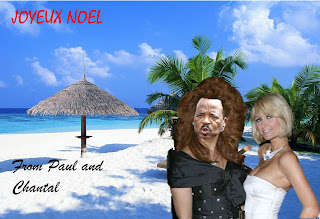
Christmas cards, dictator style
Season's greetings for the discerning Africa geek! These were lovingly created by a wonderful friend of mine who prefers to remain anonymous.




08 December 2011
From the delightful Nigerian who taught me about pink gin tonics
Today, I've had two in part practically identical discussions about homosexuality in Africa that made me repost this link. Here's a - clearly exasperated - comment from a lovely Nigerian friend on Nigeria's proposed anti-gay legislation:
Nigerians should stop choosing what part of Western culture appeals to us and what doesn't: we accept skinny jeans, MTV & Coca Cola, but reject two grown men or women doing what they like in the privacy of their homes. We reject the idea of homosexuality on the basis of what is preached in the bible which itself was forced on us by colonial oppressors (who incidentally also brought with them the whole concept of homophobia, which, like it or not, did not exist before they came, simply because we didn't care enough to define and label homosexuality).
Nigerians (more than most Africans) crave western designer brands and lifestyles, a significant portion of which are conceived, designed, created and delivered to us by "gay brains" (Versace, YSL, Gucci, D&G, just to name a very few). And then they say they don't want such brains amongst them.
You can continue to deny what really exists by chastising, banning, outlawing and ostracising it. And before you know it, we will be likened to Al Shabab in Somalia who have banned football and samosas because they are "evil", or the Taliban who forbid music, art, education and so much more. In fact, why look so far for examples of where Nigeria is headed when we have Boko Haram beating on our doors to let Sharia in!
If as a Nigerian citizen you have the right to say what you want, do what you want, be who you want, then that should apply to all citizens regardless of their religion, tribe, gender, sexual preferences. No one citizen is more of a citizen than the next!
Nigerians should stop choosing what part of Western culture appeals to us and what doesn't: we accept skinny jeans, MTV & Coca Cola, but reject two grown men or women doing what they like in the privacy of their homes. We reject the idea of homosexuality on the basis of what is preached in the bible which itself was forced on us by colonial oppressors (who incidentally also brought with them the whole concept of homophobia, which, like it or not, did not exist before they came, simply because we didn't care enough to define and label homosexuality).
Nigerians (more than most Africans) crave western designer brands and lifestyles, a significant portion of which are conceived, designed, created and delivered to us by "gay brains" (Versace, YSL, Gucci, D&G, just to name a very few). And then they say they don't want such brains amongst them.
You can continue to deny what really exists by chastising, banning, outlawing and ostracising it. And before you know it, we will be likened to Al Shabab in Somalia who have banned football and samosas because they are "evil", or the Taliban who forbid music, art, education and so much more. In fact, why look so far for examples of where Nigeria is headed when we have Boko Haram beating on our doors to let Sharia in!
If as a Nigerian citizen you have the right to say what you want, do what you want, be who you want, then that should apply to all citizens regardless of their religion, tribe, gender, sexual preferences. No one citizen is more of a citizen than the next!
14 October 2011
Media Nitpicking: Friday Standard
Just scanned the Standard’s front page and holy cow, did they butcher it today:
In an article on new measures to save the shilling, Uhuru has, the Standard writes, lowered the limit on foreign exchange exousrue for commercial banks. I genuinely can’t figure out what this is supposed to mean (coffee just arriving at my brain) until a look at another paper unriddles it: foreign exchanges exposure.
Then I spot the teaser for Pulse magazine on the front page: ‘Kampala Courousal: Pulse transports you to Kampala for an afternoon of footbal and a ‘night run’’.
A courousal? Let’s have a look. On the Pulse cover, the courousal turns back into a ‘carousal’ and they’ve generously fetched another l to add to football. Onwards and upwards. In the main article on the football match (p. 10/11), you’ll find ‘As time tickles on’.
I quickly scan the fashion pages and have to give Pulse some credit: they manage to use ‘chic’ correctly. Twice. But the shoes described as loafers aren’t loafers, and the ‘statement heels’ aren’t exactly statement heels either.
Right, I’ve got stuff to do. If you find anything else in this edition of the Standard, stick it in the comments.
In an article on new measures to save the shilling, Uhuru has, the Standard writes, lowered the limit on foreign exchange exousrue for commercial banks. I genuinely can’t figure out what this is supposed to mean (coffee just arriving at my brain) until a look at another paper unriddles it: foreign exchanges exposure.
Then I spot the teaser for Pulse magazine on the front page: ‘Kampala Courousal: Pulse transports you to Kampala for an afternoon of footbal and a ‘night run’’.
A courousal? Let’s have a look. On the Pulse cover, the courousal turns back into a ‘carousal’ and they’ve generously fetched another l to add to football. Onwards and upwards. In the main article on the football match (p. 10/11), you’ll find ‘As time tickles on’.
I quickly scan the fashion pages and have to give Pulse some credit: they manage to use ‘chic’ correctly. Twice. But the shoes described as loafers aren’t loafers, and the ‘statement heels’ aren’t exactly statement heels either.
Right, I’ve got stuff to do. If you find anything else in this edition of the Standard, stick it in the comments.
28 September 2011
Le Sigh: Recycled Soap to Uganda
More evidence if you ever needed any that Africa is a bizarre theme park for good intentions:
Told by CNN no less, and in its CNN Heroes section: The heartwarming tale of Derreck Kayongo, a Ugandan living in the US, who was shocked by the waste from hotel soaps – every visitor gets a new piece of soap, every day, and the barely used soap is being thrown out. "Are we really throwing away that much soap at the expense of other people who don't have anything? It just doesn't sound right. … My dad said people in America can afford to throw it away. But I just started to think, 'What if we took some of this soap and recycled it, made brand new soap from it and then sent it home to people who couldn't afford soap?'”
The CNN article cites statistics that every year, more than 2 million children die from diarrheal illness in developing countries. Simply washing hands with soap could be a first line of defence. Mr Kayango argues that the problem is not the availability of soap, but its cost: for people on the mythical dollar a day, a soap bar is simply too expensive to purchase when there are many more pressing priorities such as food and medication. Fair enough.
Mr Kayongo sets up what is now the Global Soap Project. Here’s CNN’s description:
“So far, 300 hotels nationwide have joined the collection effort, generating 100 tons of soap. Some participating hotels even donate high-end soaps such as Bvlgari, which retails up to $27 for a single bar. Volunteers across the U.S. collect the hotel soaps and ship them to the group's warehouse in Atlanta. On Saturdays, Atlanta volunteers assemble there to clean, reprocess and package the bars.
"We do not mix the soaps because they come with different pH systems, different characters, smells and colors," Kayongo said. "We sanitize them first, then heat them at very high temperatures, chill them and cut them into final bars. It's a very simple process, but a lot of work."
A batch of soap bars is only released for shipment once one of its samples has been tested for pathogens and deemed safe by a third-party laboratory. The Global Soap Project then works with partner organizations to ship and distribute the soap directly to people who need it -- for free.”
Rethink this for a second: The Global Soap Project requires managing the participating hotels and the collecting volunteers. The volunteers pay for shipping. The soap people need to buy machinery, pay for space, do lots of sorting-producing-heating-sanitising-testing type things ('a lot of work', as they say), pay for shipping ... to get soap to Uganda.
Here's the thing: Uganda has shops. Many. Even supermarket chains. Uganda also has soap manufacturers. When I lived in Uganda ten years ago, you were given those long soap bars for free at the petrol station if you purchased a certain minimum amount of petrol. I have heard of recent fuel and sugar shortages, but no soap shortages have hit the headlines.
If you think distributing free soap to Ugandans who can’t afford it is a good thing, then this is probably single-handedly the least efficient way of doing it. It is also latently ignorant and patronising: Send US rubbish to the ever grateful Ugandans.
How about sending some cash to Uganda to buy the soap there and then have it distributed by the local partner organisations?
Brains, people. Use them.
But heartwarming, hey?
Told by CNN no less, and in its CNN Heroes section: The heartwarming tale of Derreck Kayongo, a Ugandan living in the US, who was shocked by the waste from hotel soaps – every visitor gets a new piece of soap, every day, and the barely used soap is being thrown out. "Are we really throwing away that much soap at the expense of other people who don't have anything? It just doesn't sound right. … My dad said people in America can afford to throw it away. But I just started to think, 'What if we took some of this soap and recycled it, made brand new soap from it and then sent it home to people who couldn't afford soap?'”
The CNN article cites statistics that every year, more than 2 million children die from diarrheal illness in developing countries. Simply washing hands with soap could be a first line of defence. Mr Kayango argues that the problem is not the availability of soap, but its cost: for people on the mythical dollar a day, a soap bar is simply too expensive to purchase when there are many more pressing priorities such as food and medication. Fair enough.
Mr Kayongo sets up what is now the Global Soap Project. Here’s CNN’s description:
“So far, 300 hotels nationwide have joined the collection effort, generating 100 tons of soap. Some participating hotels even donate high-end soaps such as Bvlgari, which retails up to $27 for a single bar. Volunteers across the U.S. collect the hotel soaps and ship them to the group's warehouse in Atlanta. On Saturdays, Atlanta volunteers assemble there to clean, reprocess and package the bars.
"We do not mix the soaps because they come with different pH systems, different characters, smells and colors," Kayongo said. "We sanitize them first, then heat them at very high temperatures, chill them and cut them into final bars. It's a very simple process, but a lot of work."
A batch of soap bars is only released for shipment once one of its samples has been tested for pathogens and deemed safe by a third-party laboratory. The Global Soap Project then works with partner organizations to ship and distribute the soap directly to people who need it -- for free.”
Rethink this for a second: The Global Soap Project requires managing the participating hotels and the collecting volunteers. The volunteers pay for shipping. The soap people need to buy machinery, pay for space, do lots of sorting-producing-heating-sanitising-testing type things ('a lot of work', as they say), pay for shipping ... to get soap to Uganda.
Here's the thing: Uganda has shops. Many. Even supermarket chains. Uganda also has soap manufacturers. When I lived in Uganda ten years ago, you were given those long soap bars for free at the petrol station if you purchased a certain minimum amount of petrol. I have heard of recent fuel and sugar shortages, but no soap shortages have hit the headlines.
If you think distributing free soap to Ugandans who can’t afford it is a good thing, then this is probably single-handedly the least efficient way of doing it. It is also latently ignorant and patronising: Send US rubbish to the ever grateful Ugandans.
How about sending some cash to Uganda to buy the soap there and then have it distributed by the local partner organisations?
Brains, people. Use them.
But heartwarming, hey?
Subscribe to:
Posts (Atom)


 Posts
Posts

